This article was machine-translated from the Korean original. Read the Korean original
When we take our address and stand looking at the pin in the distance, we face the flat or undulating terrain laid out before us. To golfers, the course is a sports arena composed of 18 intricate holes; however, if we broaden our perspective slightly, it is a colossal "spatial art" completed by the addition of human vision to the vast canvas of nature. From the soft curves of the fairway and the bold undulations of the bunkers to the silhouette of the clubhouse where horizontal and vertical lines intersect, the golf course is, in itself, Land Art and a culmination of sophisticated landscape architecture.
However, despite living in such a beautiful space, many golfers focus solely on the numbers on their scorecards and the trajectory of the flying ball, missing the visual awe provided by the surrounding lines and planes. If one is engrossed only in the physical training of mechanically hitting the ball at the driving range, it is easy for the body to stiffen up when actually stepping out onto the wide-open course, unable to adapt to the three-dimensional sense of distance and spatial changes provided by the terrain. When the ball isn't coming together and your vision feels stifled, what we need is not a technical obsession with the golf swing. It is a recharge of artistic inspiration that will freshen up the dormant visual cells within us and cultivate the eye to view space in three dimensions.
Interestingly, when visiting a quiet art museum on a weekend or during the off-season to quietly gaze at the intricate lines of modern architecture, one discovers a peculiar parallel: the trajectory of one's own swing bears a surprising resemblance to the structural engineering of the architecture. Today’s fifteenth story of 'WILD IMAGINATION' offers a new perspective connecting the inside and outside of the golf course; it is a private and captivating record of a fusion regarding how the sensory 'sense of space' gained while strolling through museums and galleries manifests as the most elegant signature shot on the field.
011. The Straight Line of Modernist Architecture: The Axis of the Spine and the Unwavering Centerline
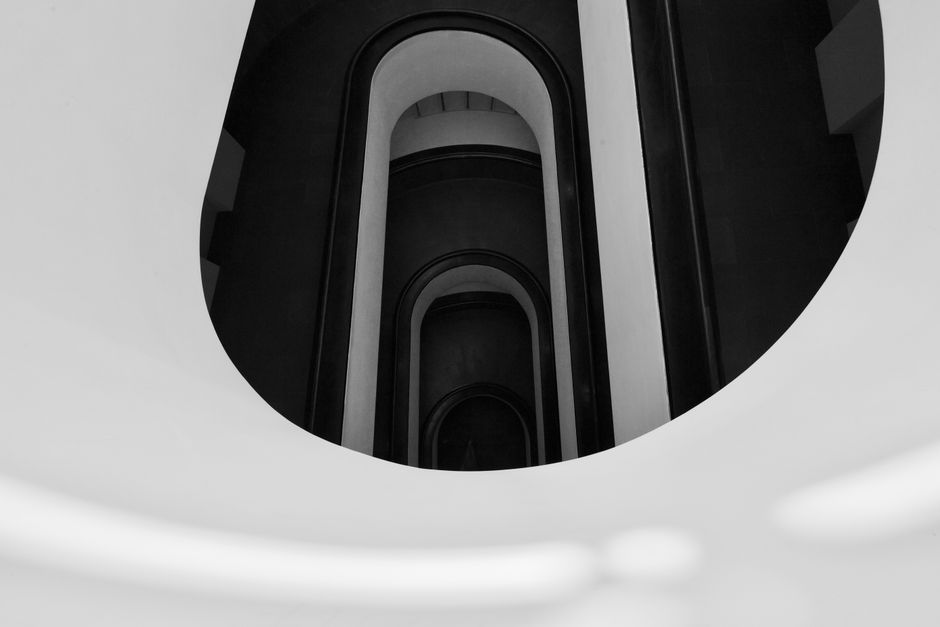
For the 2030 generation who enjoy museum tours, the minimalist modernist architecture left behind by masters of modern architecture is, in itself, a tremendous source of inspiration. Structures of uncluttered straight lines completed solely with concrete, steel, and glass. As one gazes at the columns stretching straight toward the sky and the beams drawing long, smooth horizontal lines while bearing the building's weight without any flashy decoration, a pleasant sense of tranquility and stability fills the heart.
The straight lines of this intricate architecture are seamlessly replaced by the invisible 'Spine Angle' and centerline within my body the moment I take my golf address.
- The Swing Axis Learned from Structural Stability: The reason great buildings do not waver even after decades of wind and rain is that a solid vertical axis is in perfect balance with the ground. The same applies to golf. The cleanest and most precise solid strike is produced when there is an invisible straight line running along my spine when I stand holding a driver, and when that axis remains firmly fixed without swaying from side to side during the swing.
- The eye for visual alignment: A golfer who has trained their sense of visual proportions by gazing at the long corridors of an art museum lobby or horizontal floor-to-ceiling windows possesses an exceptional eye for aligning the imaginary lines of the fairway when standing on the tee box. It is a sophisticated sense of alignment that allows one to neatly align the lines of one's pelvis and shoulders with the horizontal lines of the course, while others struggle to position themselves properly at the target. This is precisely why the swing of a golfer who loves the neat lines of modernist architecture is exceptionally clean and unwavering.
022. The Curve of a Sculpture: The Fleeting Aura Created by the Swing Plane
Let us quietly observe the massive modern sculptures placed in the courtyards or centers of art museums. The curves of bronze or marble gently bend, dividing the space. Despite being static, solid materials, a peculiar dynamism and a flowing rhythm are hidden within those curves. It is an aesthetic experience where the sense of volume in the space feels different every time, depending on the angle from which the viewer walks slowly around the sculpture.
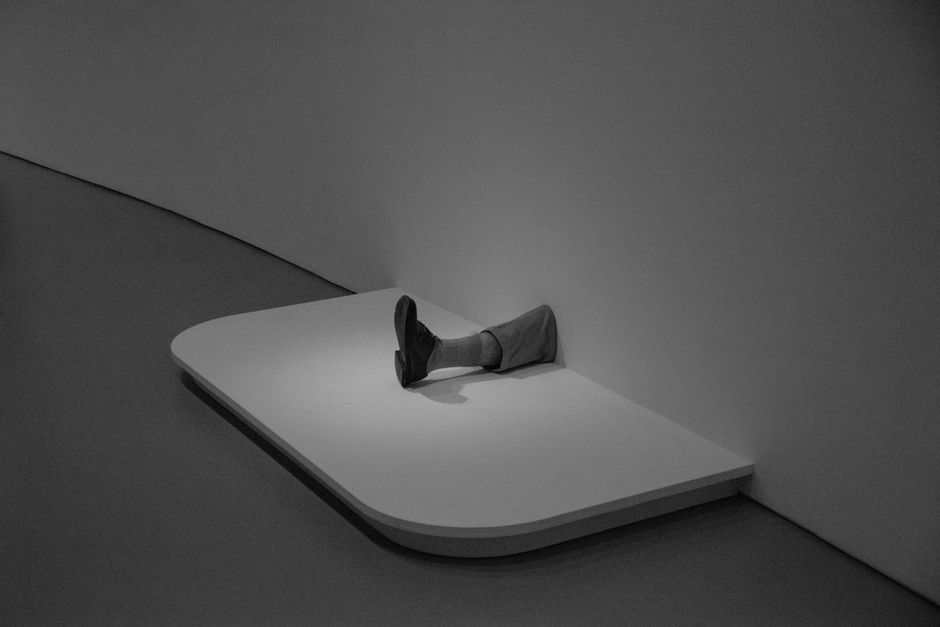
A golf swing is the act of creating the 'most perfect three-dimensional curve (Swing Plane)' that the club head traces in the air, centered on a solid axis called the body.
- Sculpting the Earth Completed in the Finish Position: From the top of the backswing, through the downswing and past the moment of impact, to the finish position where the club is gently wrapped around your back. Although the path the club head traces in the air is invisible, in that fleeting moment, the most beautiful three-dimensional sculpture is briefly born and vanishes on the field. Let go of the obsession with hitting the ball hard when swinging, and try image training by carefully drawing the soft, elegant curves of a sculpture seen in an art museum in the air.
- The synergy of rhythm and softness: the aesthetics of a release where the beginning and end connect as a single beautiful line, rather than stiff, abrupt movements. When the space left by the release of excessive force is filled with the image of an artistic curve, my swing finally transcends mechanical motion and blossoms into my own unique signature aura that captivates the gaze of others.
033. Course as Land Art: A Three-Dimensional Perspective on Reading the Flow of Space
A golfer with truly keen insight does not stare intently only at the small white ball lying at their feet. Before taking their address, they raise their heads to survey the elevation changes of the entire course, the locations of the bunkers, the direction of the wind, and the perspective created by the mountain ridges stretching behind the green, viewing them three-dimensionally like a giant landscape painting. This is a clever perspective that understands space from the viewpoint of 'land art,' where nature and human design interact.
 As visiting art museums opened my eye for space, the green lines in the field started looking much more three-dimensional.A golfer who enjoys art museum tours
- Those who have experienced the structure of large galleries or installation art—which utilizes the entire space as an artwork beyond the flat surface of a canvas—possess an exceptional sense of spatial perception. It is the insight to visualize the slope of the grass (lie) not merely as a two-dimensional incline when approaching the green on the field, but as a three-dimensional flow along which the ball will roll, rather than viewing it as a simple two-dimensional slope. From this comes an attitude of acceptance: one that calmly embraces the structural characteristics of the course as an artistic rule, without resenting or panicking at changes in the external environment.
- Flexible dialogue with the space: Playing by flexibly adjusting one's body balance to the space, adapting to the wind as it blows and the undulations of the course as steep as they are. It is the dignity of knowing how to fully savor the leisure offered by the land while walking cheerfully across the 18-hole course with companions, just as one allows the movement of one's body to flow naturally within the architecture of a massive art museum. That is the true discernment that makes a golfer appear far more attractive and intellectual than a luxury brand logo.
04Outro: Inspiration from off the field changes me on the field
We often believe that mechanical, repetitive practice at the tee box is the only answer to improving our golf skills. However, if our mental capacity and visual perspective are narrowly confined, we cannot overcome the immense pressure of the vast space of the golf course, no matter how good the lessons are or how many times we hit the ball. Paradoxically, the secret to overcoming the slump that strikes when the spectrum of our lives is tied solely to scores within the golf course fence lies hidden in the spaces of culture and art where we have temporarily set down our golf clubs.
Just as a thin essay on life read under the lamplight on a weekend night gently soothed my shattered mental state, the intricate straight lines of architecture and the beautiful curves of sculptures, captured in my eyes and heart through a quiet weekday museum tour, remain fully stored in my subconscious until they shine on a tea box on the weekend.
When you head out for a round this weekend, instead of hiding your individuality behind huge, flashy logos, let's subtly blend the calm, intellectual atmosphere of strolling through an art museum into your caddy bag. The moment you step onto the first-hole tee box and gaze out at the expansive fairway, what unfolds before your eyes is not merely a patch of grass, but a perfect three-dimensional space of art where you will step in as the protagonist. Amidst the countless golfers who merely consume trends, I support your dignified golf lifestyle as you dominate the space and swing elegantly with your own profound artistic vision. Play More, Art Deeper, Swing Free!