This article was machine-translated from the Korean original. Read the Korean original
It is easy to think that green reading is done by intuition, but I call it the "art of prediction." It is a prediction based on observing the green and hitting with a certain force, predicting how much the ball will curve in a certain way; such predictions require a strategy that prevents significant losses even if mistakes are made.
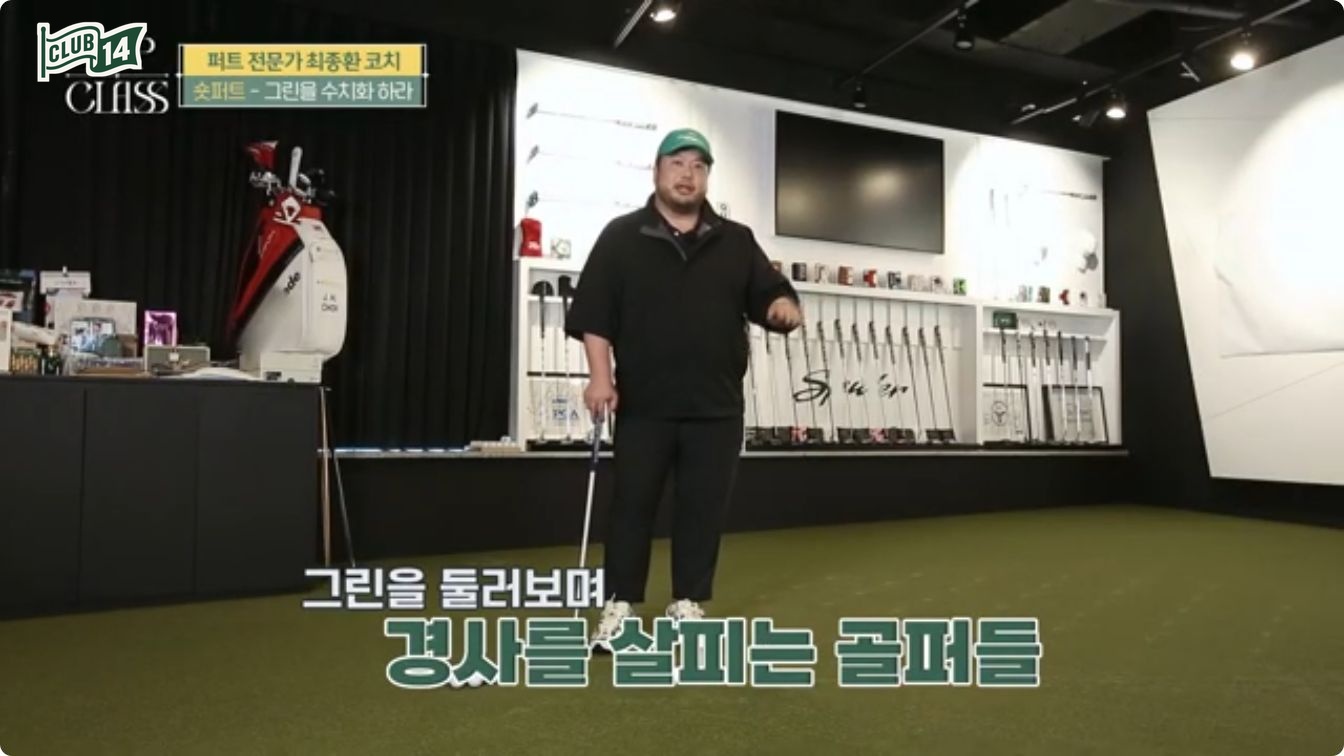
While long putts require intensive training due to the highly irregular greens, short putts within 1.5 meters have less irregularity, allowing you to formulate a formula. Today, I have summarized that formula for reading the green for short putts.
01Green Reading, what exactly is it looking at in the end?
When you get on the green, you sit down to look, look from the lower side, and look from the back—the reason you walk around observing like this is ultimately to see the slope of the ground as the ball rolls to the hole. While the grain of the grass does have an effect, the slope is the biggest factor in how the ball curves.
After completing the green reading, there are two things we need to gain: a visualization of how much the ball will curve, and a target determining which direction to launch it. Green reading is ultimately the process of setting a target.
On a straight slope, you can simply aim for the center of the hole, but on a sloped green where the ball curves, your target must deviate from the center of the hole. However, many people—including professionals as well as amateurs—hesitate on where to look when facing short distances and end up making a bizarre putt without even realizing it.
Let me share an example of player Lee Da-yeon. While preparing for her return early this year after surgery last year, she struggled with tricky short putting distances, but after training with this formula, it led to a victory this year.
02Just as there is a standard for distance, there is also a standard for slope.
When selecting clubs on the fairway, having quantifiable standards like 100 yards or 150 yards makes the choice easier. If you practice at the driving range beforehand and know how many yards your 7-iron goes, you simply need to adjust it based on the wind on the course.
On the green, what we need to quantify is the slope. Just as distance is quantified, if you can predict the slope as a percentage, setting targets becomes much easier.
03How to Read Slopes as Percent
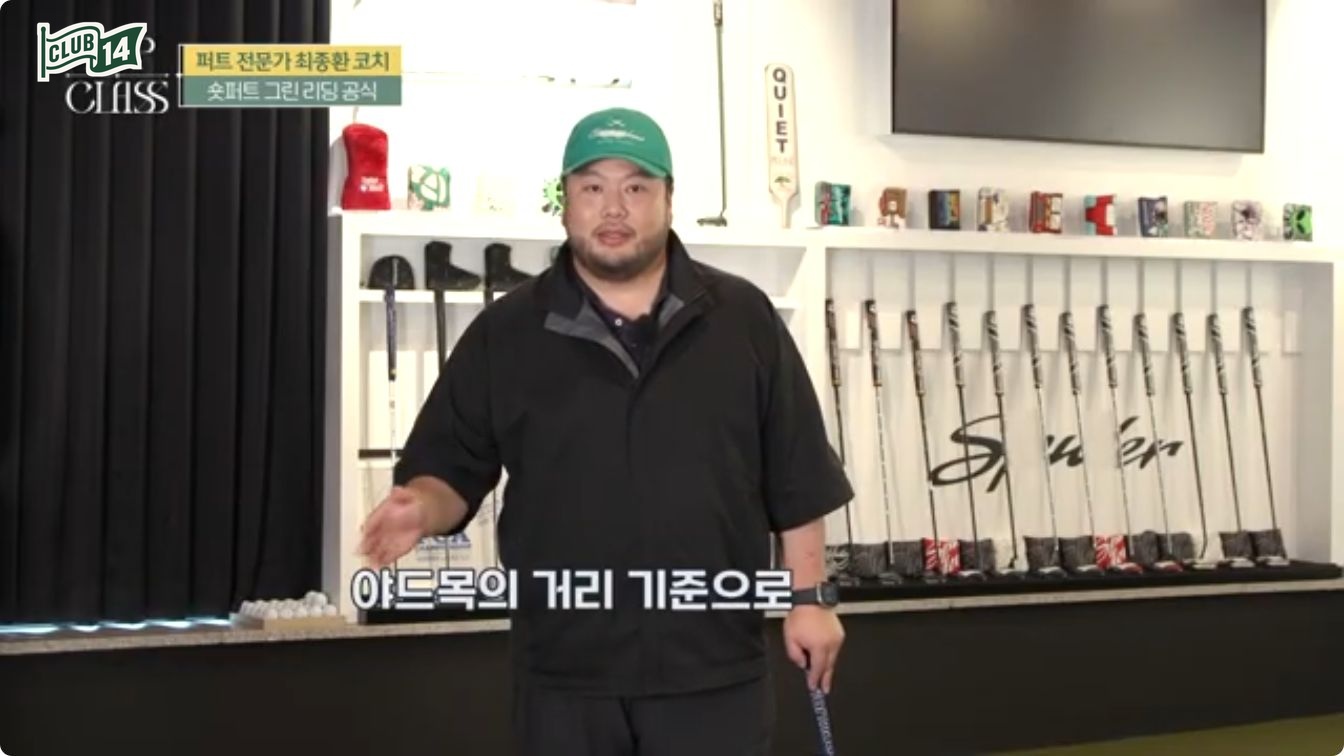
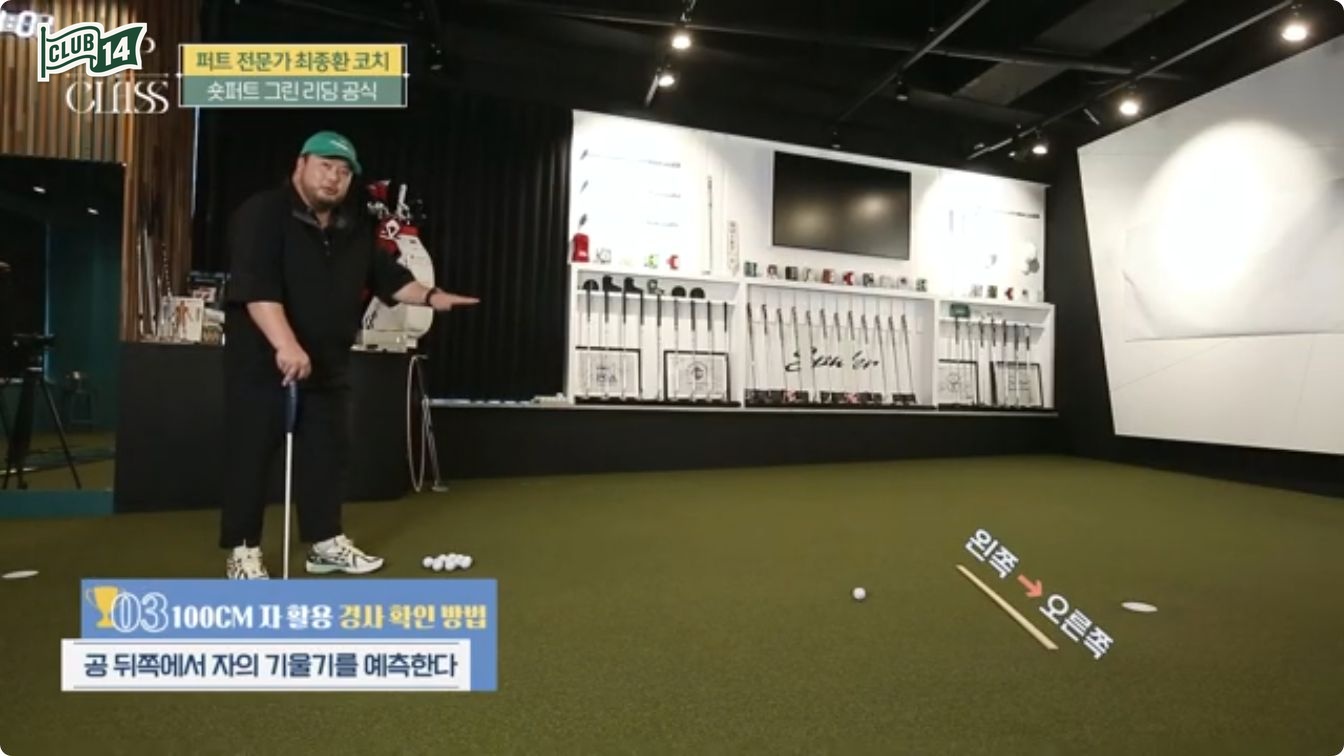
The standard is a 100cm ruler. The state where neither end of the ruler is tilted in either direction is 0%. If one end of this 100cm ruler goes down 1cm, it is 1%; if it goes down 2cm, it is 2%; if it goes down 3cm, it is 3%—the percentage is equal to the number of centimeters the ruler has lowered.
If you look at the slope and think, "At that level, one end looks about 3cm lower," you can read it as a 3% slope. The goal is not to get the exact answer right, but the key is to convert the visible slope into a quantified prediction.
04Try this for eye-reading practice.
The ability to turn intuition into numbers is developed through practice. Here is the method I will teach you.
- Making a line connecting the ball and the holeAlign one end of a 100cm ruler with the entrance of the hole, and place the ball at the 90cm mark of the ruler to create a line connecting the ball and the hole.
- Observe by lowering your posture at the midpointPlace a ruler horizontally at intervals along this line, and lower your posture to observe.
- Ask yourself two thingsTry to predict by asking yourself which side is higher and lower, and what percentage it is.
05Formula for setting a target
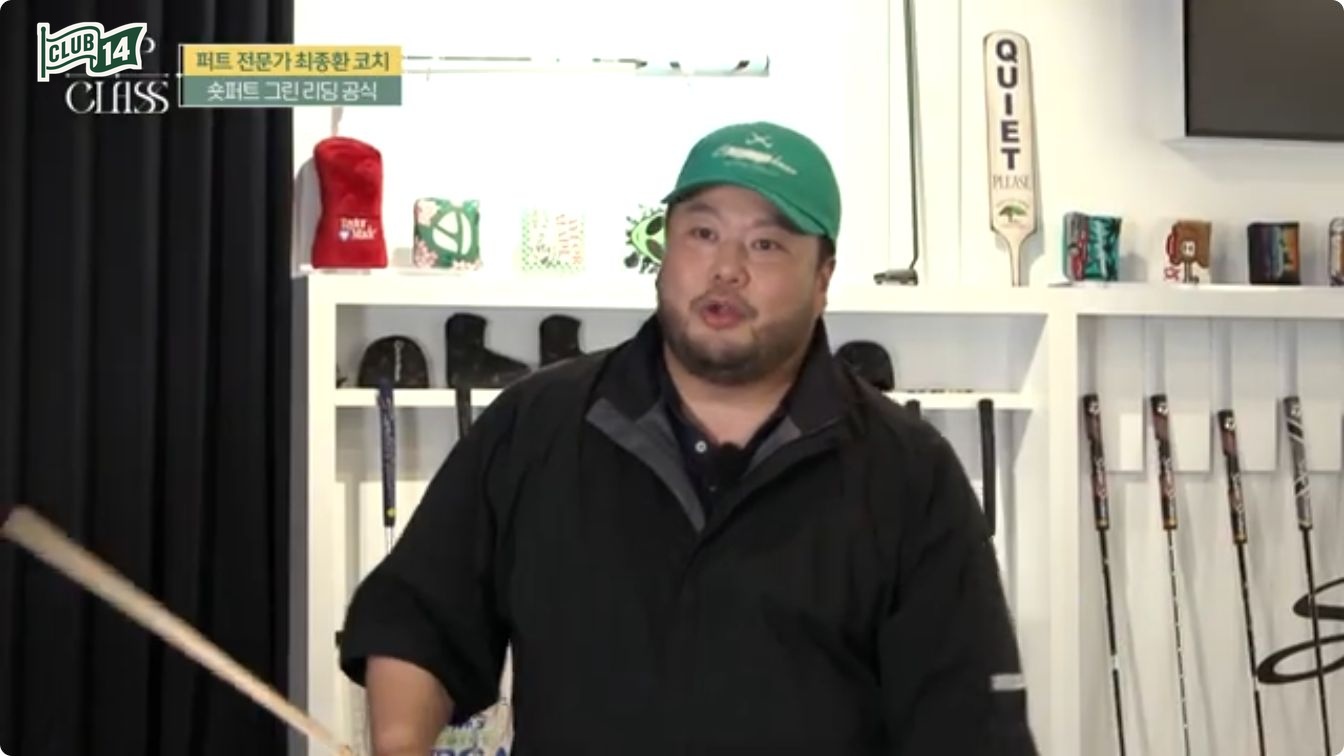
Once you have read the slope as a percentage, you can determine where to aim using the formula below. The reference point is the higher edge of the hole.
| slope | Target (Aim) Point |
|---|---|
| 0% | Look at the center of the hole and hit it straight down. |
| 1% | 2cm inward from the high edge of the hole |
| 2% | 1cm from the high edge of the hole |
| 3% | One ball size further out from the high edge of the hole |
For example, if the slope is 3% with the left side higher and the right side lower, the ball will roll from left to right. In this case, you should aim about one ball width outside the left edge of the hole.
06Why is it enough to know only up to 3%?
It is not easy to encounter a slope exceeding 3% on short putts. On average, it hovers around 2%, and the flagstick is rarely placed on slopes exceeding 3% in the first place. This is because it is so difficult that the game itself cannot proceed.
So, for short putts within 1.5 meters, it is sufficient to be able to read the slope as between 0% and 3%. For the rest, you just need to adjust your target according to the formula above.
07Organizing today
Green reading is not a test of finding the correct answer, but a skill of prediction. If you develop an eye for reading slopes as percentages based on a 100cm standard, short putts become much simpler because you just need to input the target that matches that percentage.
When you are struggling with a short putt in the next round, try recalling the formula you summarized today first.