This article was machine-translated from the Korean original. Read the Korean original
The iron is one of the most important clubs for achieving a good score. Even if you hit the driver well, you ultimately need to be able to send the ball to your desired spot with an iron to attack the green. However, to increase your par-on rate, simply hitting the iron far and straight isn't enough. Today, let's put the full swing aside for a moment and practice control shots that improve iron accuracy.
A control shot is a shot that creates the distance and trajectory you desire. You could say that a full swing is hitting the ball the distance you are capable of, while a control shot is hitting just the distance you need at that moment.
01Moments when a control shot is needed
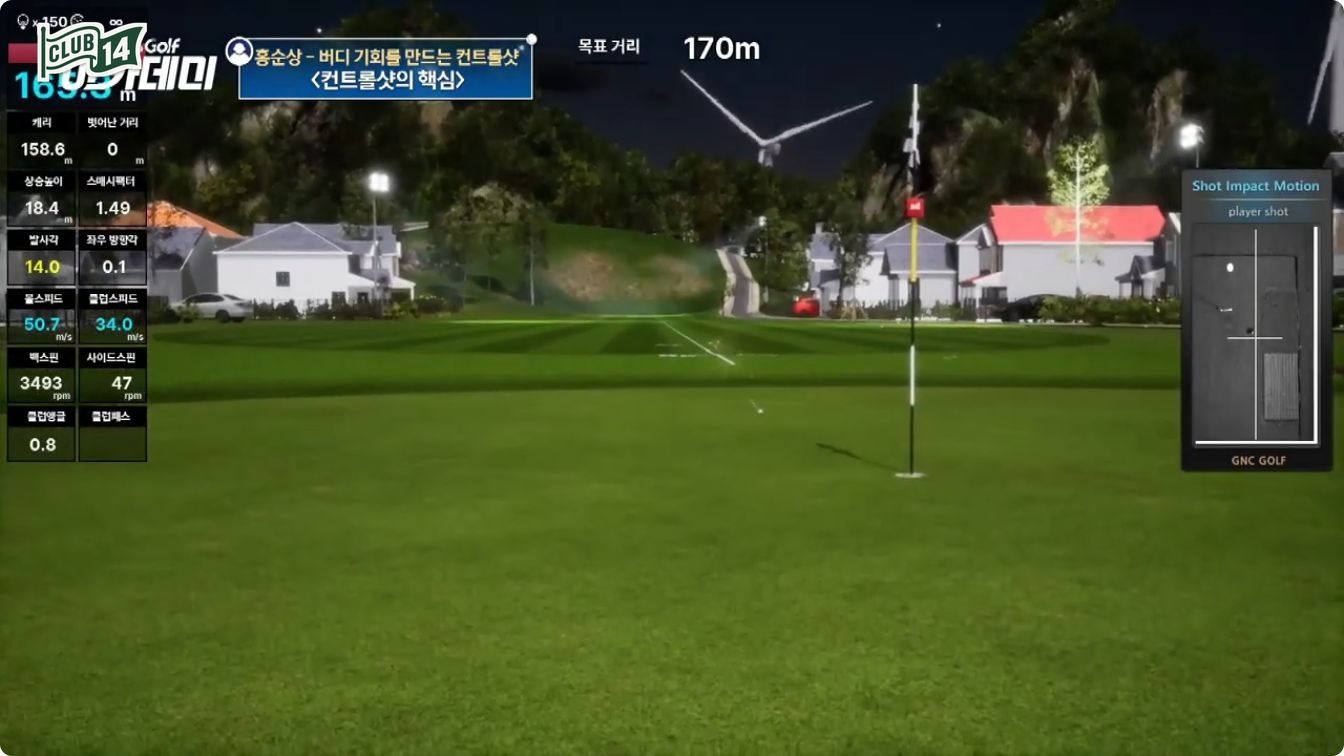
I aim for a 170-yard carry with my 7-iron, but in an actual round, I rarely have exactly 170 yards left. It is much more common to hit shots from awkward distances like 172 or 166 yards. That is when a control shot comes in handy.
When the wind is strong, especially against a headwind, the more you hit with a full swing to overcome it, the more spin is applied, causing the ball to actually rise. The same applies to tailwinds. Since wind cannot be measured accurately by numbers and you must rely on your feel, a control shot that lowers the trajectory is helpful for distance control in such situations.
The same applies when the pin is a back pin and there is a penalty area behind the green. While you can hit aggressively depending on the situation, it is usually a wise strategy to play it safe by landing the ball slightly short. Even when the green slope is steep and your lower body is fixed, making a full swing difficult, you can reduce lateral deviation with a controlled shot.
02Reduce swing size, and make the impact 100%
There are various methods, but I keep the swing exactly the same and just reduce the size. If I consider a full swing to be 100, I aim for about 70–80%, keeping the backswing and finish symmetrical at a height slightly above shoulder level. Rather than a sharp angle like the 10:10 seen in watch commercials, I always visualize the swing finishing at the same height on both sides. That helps produce much more consistent distance.
The important thing here is that just because you have reduced your swing, you shouldn't reduce your impact. Maintain everything else exactly the same; you should focus on reducing the swing size while ensuring that you deliver 100% of your power at impact. This way, the finish won't go too far and will stop naturally at the same height as the backswing. In fact, there are cases where reducing the swing size improves your accuracy and results in greater distance than expected.
03It is more certain if you hold the grip shorter.
In such cases, gripping the club one inch shorter—or even closer to the shaft—will significantly reduce club speed and shorten the distance. Combining a shorter grip with a reduced swing size allows you to achieve your desired distance difference more effectively.
04A miss pulling to the left; the cause is the arm, not the body.
When I explain it this way, many of you frequently make the mistake of pulling the ball to the left. Why is that? It is because, in the thought of needing to reduce the distance, you stop rotating your body and swing only with your arms. When your body stops rotating, the club spins, making it easy to miss to the left.
So, another important point when executing a control shot is that you shouldn't just swing with your arms as usual, nor should you slow down. Think of it as a small swing, but keep everything the same; your body and arms must always move together in harmony to improve your direction.
05How to check with an alignment stick
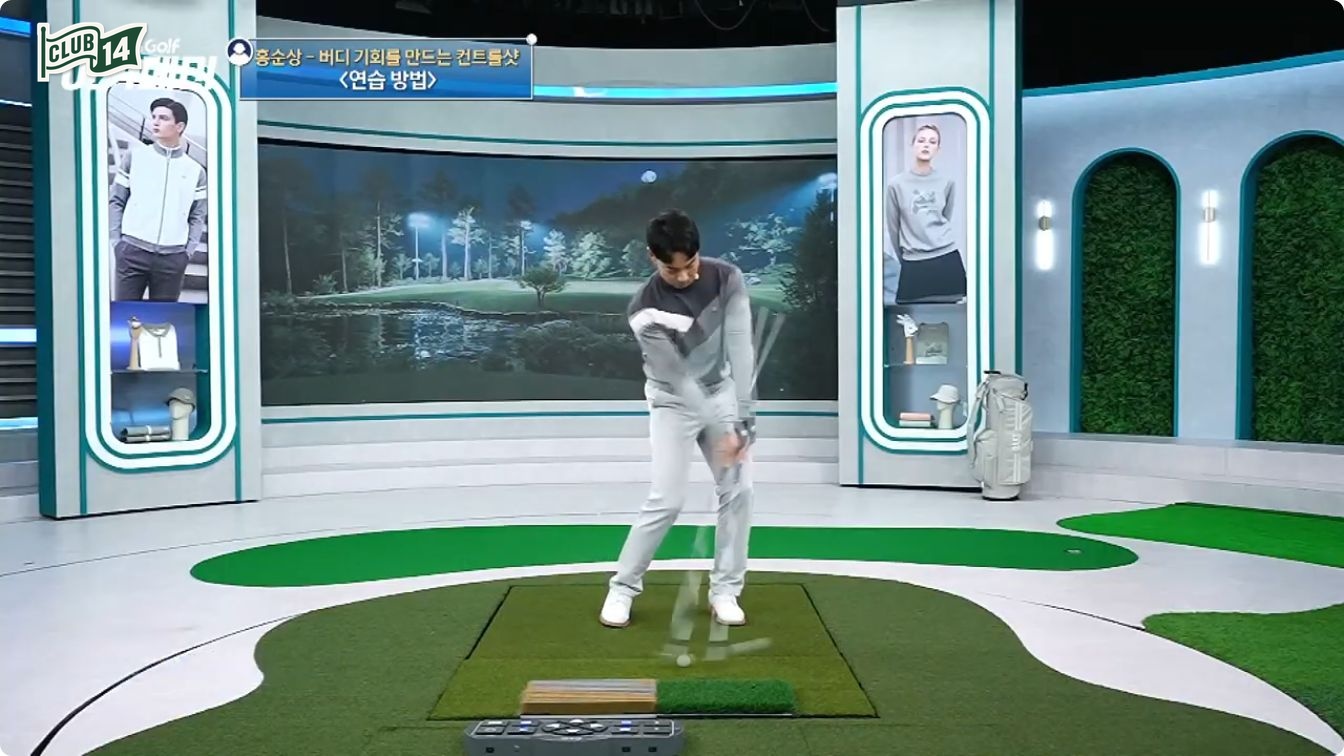
Let me show you a practice method to help you learn the feeling of your body and arms becoming one. Hold the alignment stick with the grip overlapping, and position the extension of the stick so that it faces your left side. It is important to use your wrists to ensure the stick strikes with your hand slightly ahead, preventing it from hitting your body. As your body rotates and your hips open, the stick should pass underneath your body. You only need to lift it from waist height to waist height.
If your wrist releases first, the stick will touch your body directly. As you will see when you actually try it, it can be painful enough to make your side turn red, but that provides such clear feedback. If you don't have an alignment stick, you can achieve the same effect by holding the middle of the shaft and practicing with the same feeling.
Also, shortening your backswing doesn't mean your rhythm should become rushed. I always emphasize that the start and transition of the backswing should not be rushed. Even if you have shortened your swing, please always prioritize rhythm.
06It really shines, especially on par 3s.
Looking at professional tournament statistics, the probability of making a birdie on a par-3 is about 13%, which is roughly one in eight attempts. On par-4s or par-5s, you need to hit more shots to get a birdie opportunity, but on a par-3, you can make a birdie with just one good shot. So, I think you will have more birdie opportunities once you master control shots.
07Today's homework
Please follow the practice method I explained today exactly. If you have an alignment stick, please upload a video of yourself holding the stick and swinging from waist height to waist height without hitting your body. If you do not have one, please hold the middle of the shaft and practice in the same way. If you can create a posture where you use your wrists while moving with your body without the shaft hitting your body, you have succeeded in today's homework.