This article was machine-translated from the Korean original. Read the Korean original
There is one putting technique that I consider the most important among the ones I teach you. It is optimal acceleration. Acceleration refers to the process of applying force to a stationary object to increase its speed, so the key is when we use this force when putting.
Many of you have probably heard that you need to accelerate at impact. However, I see it a little differently. We use our strength three times for a single putt.
01Three moments of exerting force
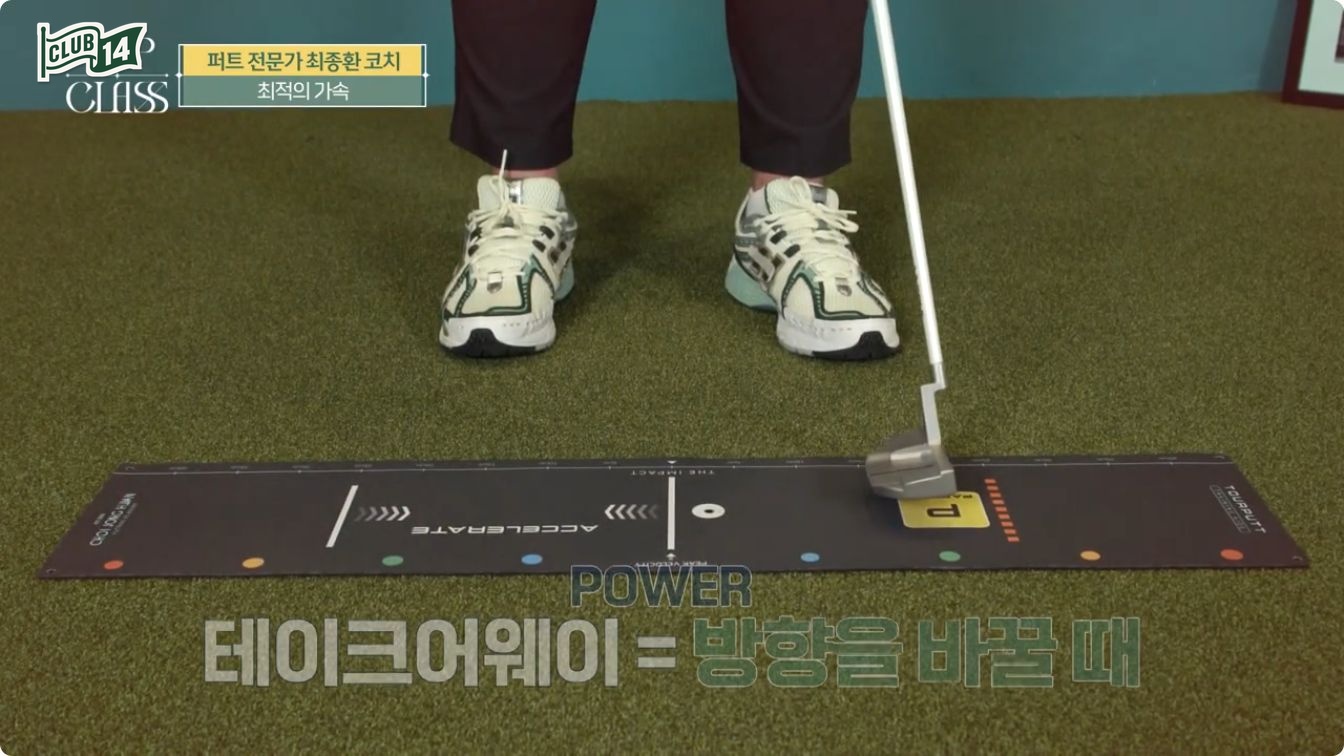
- The first force — the force used to move a stationary putter. This is the takeaway phase.
- The second force — the force used to change the direction of the club as it moves in the backswing direction. This phase is called the 'transition phase'.
- Third force — the force used to stop smoothly in the finish section.
If you look, there is the takeaway, transition, and finish, but no impact. Many amateurs make the mistake of applying force instantaneously at impact. The reason this is bad is that—just as a passenger is thrown around when you suddenly step on the accelerator while driving—it creates a very irregular impact. It is also extremely difficult to accurately deliver the desired power at that moment.
02Impact due to inertia
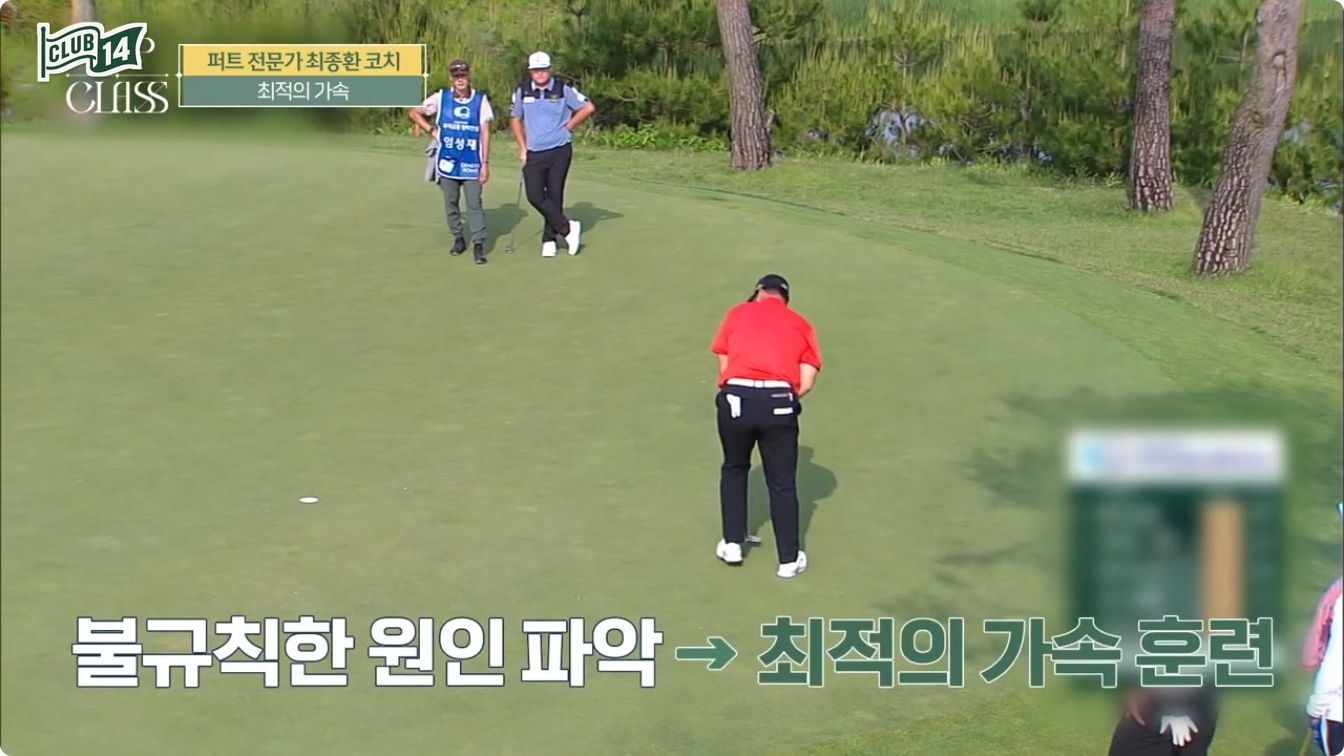
If you execute three proper accelerations, the impact ultimately becomes an impact driven by inertia. It is a method where the clubhead, already possessing sufficient speed, strikes the ball and comes to a smooth stop. This ensures that you neither add nor subtract power at the moment of impact. This provides an advantage for both directional consistency and distance control.
03The most important thing is that these two forces must be equal.
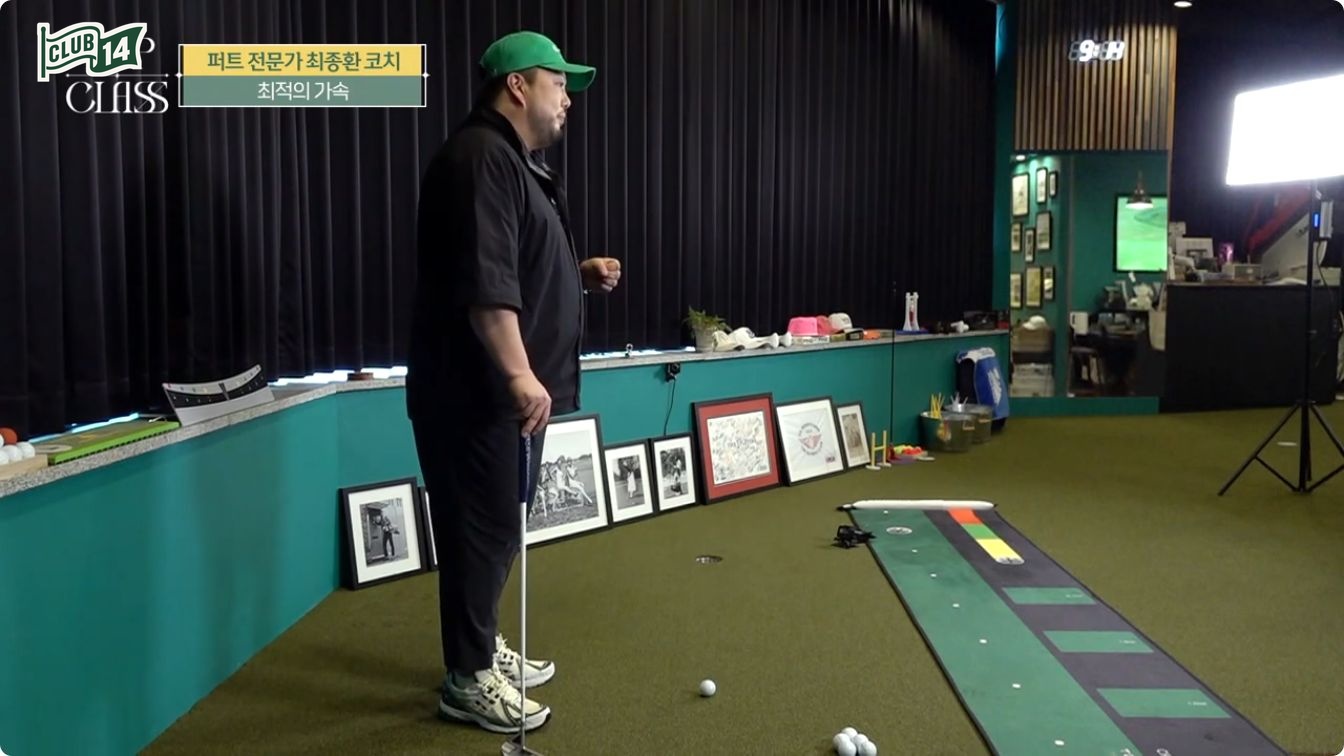
The amount of force used during the takeback and the force used during the transition phase must be as equal as possible. If this becomes too strong or too weak, you will inevitably lose control over the distance. Also, simply intending to stop as smoothly as possible during the final finish can significantly reduce the force exerted at the moment of impact.
04Players who actually saw results
A player who recently won a tournament visited me on the Monday before the victory to ask for advice on putting. The lesson I taught him that day was precisely this concept of optimal acceleration. This player is known for using acceleration very efficiently to generate distance, but putting was actually a weakness; he was a case where he used power instantaneously, to the point where he himself described it as "jabbing." I helped him with the concept of optimal acceleration, training, and even switching to a putter suited to him, and I was truly delighted that it led to his victory. Pro Lee Da-yeon, who won this year, also did quite a bit of this practice before her comeback.
05Organizing today
Power is used not at impact, but during the takeaway, transition, and finish—these three moments. Keep the power as equal as possible during the first and second phases, and stop smoothly at the end. If you remember and practice just these three things, the specific drills I will share in the next column will be much easier to understand.