This article was machine-translated from the Korean original. Read the Korean original
In my last column, I mentioned that you apply force three times when putting—takeaway, transition, and finish. However, this might be hard to grasp just by hearing it in words. So today, I will share two drills that allow you to visually check if this acceleration is working properly. These are methods that even amateurs can easily do.
01First, the visual cue.
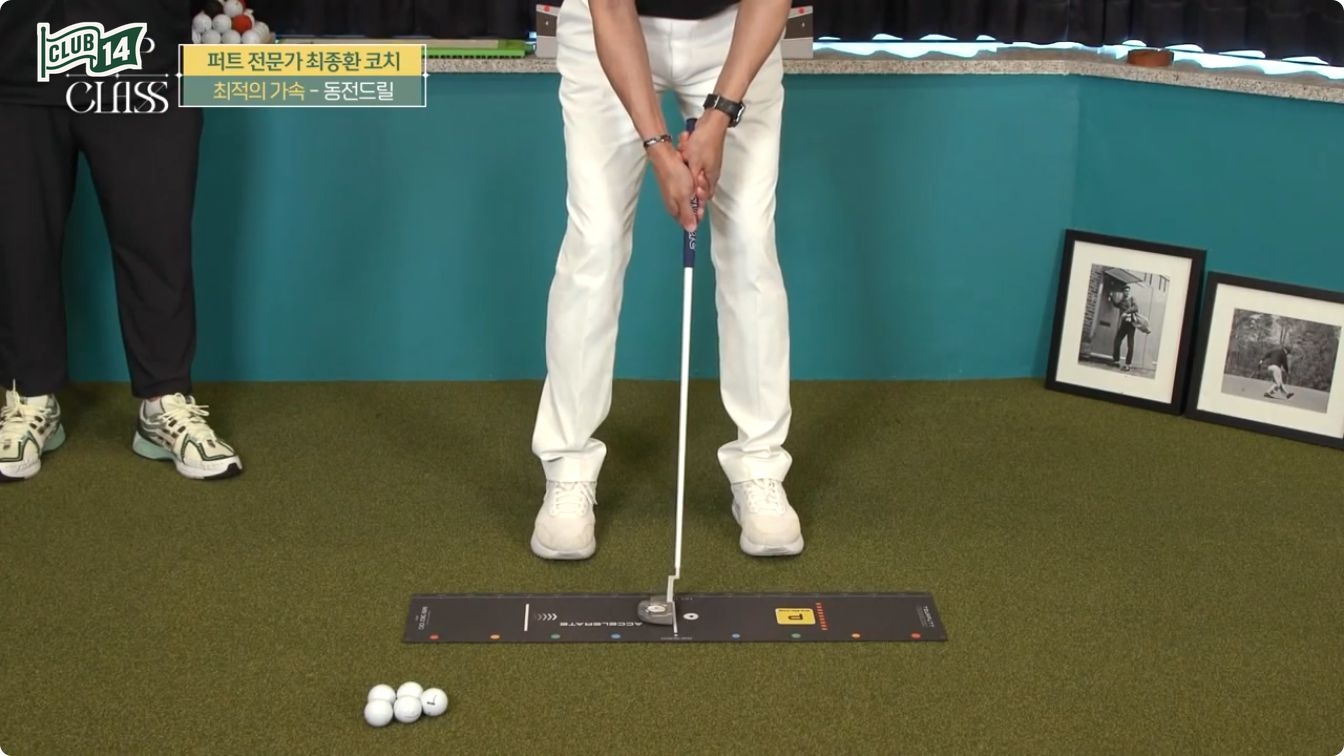
Mark the face position at address as the center line, and the face position during the backswing as the line behind it. Then, on the finish side, place a point labeled 'Parking.' This means the putter head must always stop within this box. I named it this way to emphasize that it should stop smoothly, just like parking—because those who use instantaneous power at impact tend to stop at this point as if slamming on the brakes.
02How to use a coin drill
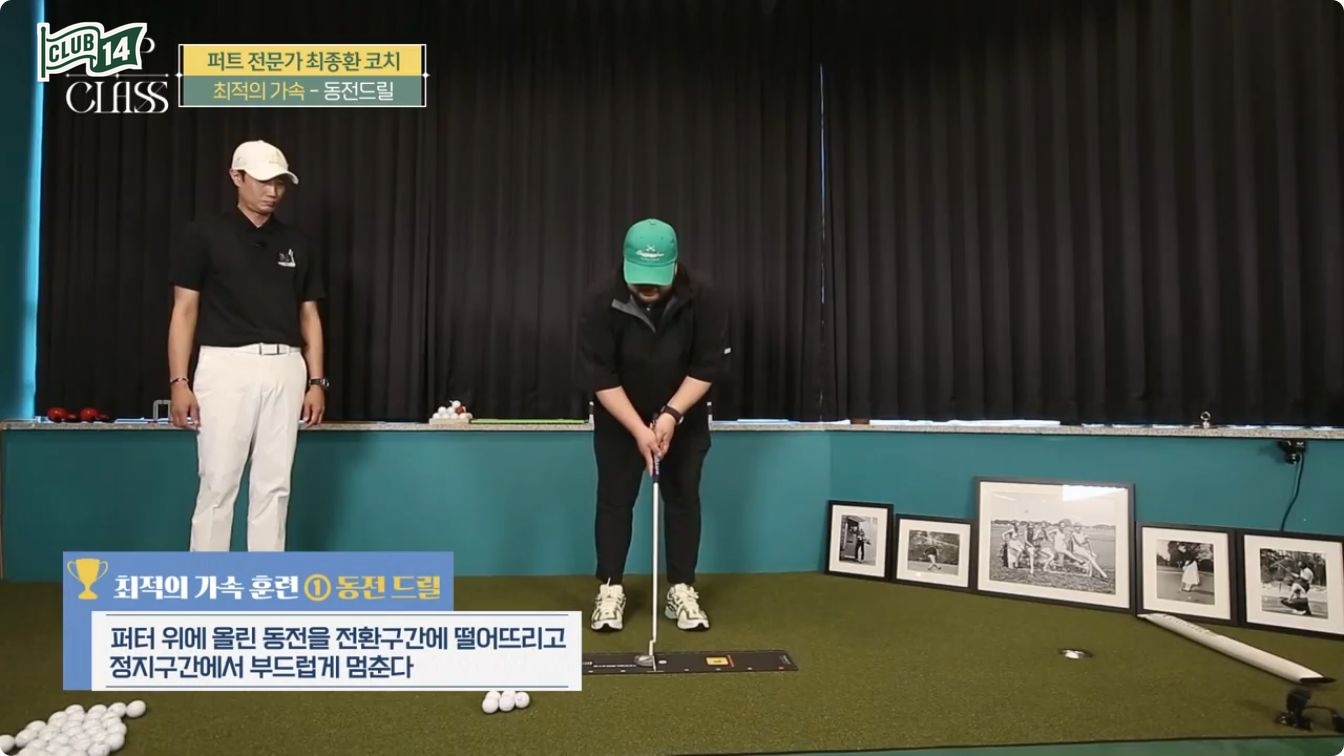
Try placing a coin on the putter head and making a stroke. If you are using a wide mallet-style putter, a slightly larger coin is fine, but if you are using a narrow blade-style putter, you should use a 100-won coin.
- Placing a coin on the putter headWhen you start the stroke, a coin falls from somewhere. The ideal location is the transition zone (the moment it changes from the backswing to the downswing).
- Checking the falling timingIf the coin falls during the transition phase, it means the acceleration was successful. Conversely, if it falls around the time of impact or afterward, the timing of applying force is too late.
- Save the feeling and hit the actual ballRepeat the coin drop motion about twice to store that feeling in your body, then try hitting the ball with that exact same sensation. The finish must always stop smoothly.
There are usually two reasons why a coin doesn't fall during the transition phase: either you didn't accelerate enough during the backswing, or you took a slow backswing and only used force on the descent. This drill will help you confirm that what we want is not to use force at impact, but to accelerate properly during the takeback and transition to stop smoothly.
03You can also check it by touch.
If the touch feels heavy when you stop smoothly, you can assume that the acceleration was good. However, if you stop smoothly but the impact feels weak, it means the acceleration was insufficient. In that case, you should look for the cause in the front (takeaway and transition zone) and resolve it.
04This drill is an exaggerated training exercise.
Practicing with a coin behind you is a slightly exaggerated training method. Its purpose is to help you clearly feel the movement when you are unsure what you are doing wrong. Once you become sufficiently familiar with this exercise, you can apply it by softening the sensation a bit when actually hitting the ball.
You can start the coin drill I introduced today right away with just a 100-won coin at home. Try it out lightly on a practice mat or carpet, and in the next column, I will continue with the 'zeroing drill' to get a sense of distance.