This article was machine-translated from the Korean original. Read the Korean original
Hello, this is Choi Jong-hwan. I am responsible for the players' putting performance, and today I’m going to talk about grips, which is what amateur golfers are most curious about.
There are actually so many ways to hold the grip that it is difficult to say definitively "this is the right answer" due to the wide variety of options. However, I will start by introducing a basic grip that serves as a standard for beginners, followed by two grips recommended for different situations.
01Basic Grip — Starts from the pistol-holding stance
- Assume a shooting stance.
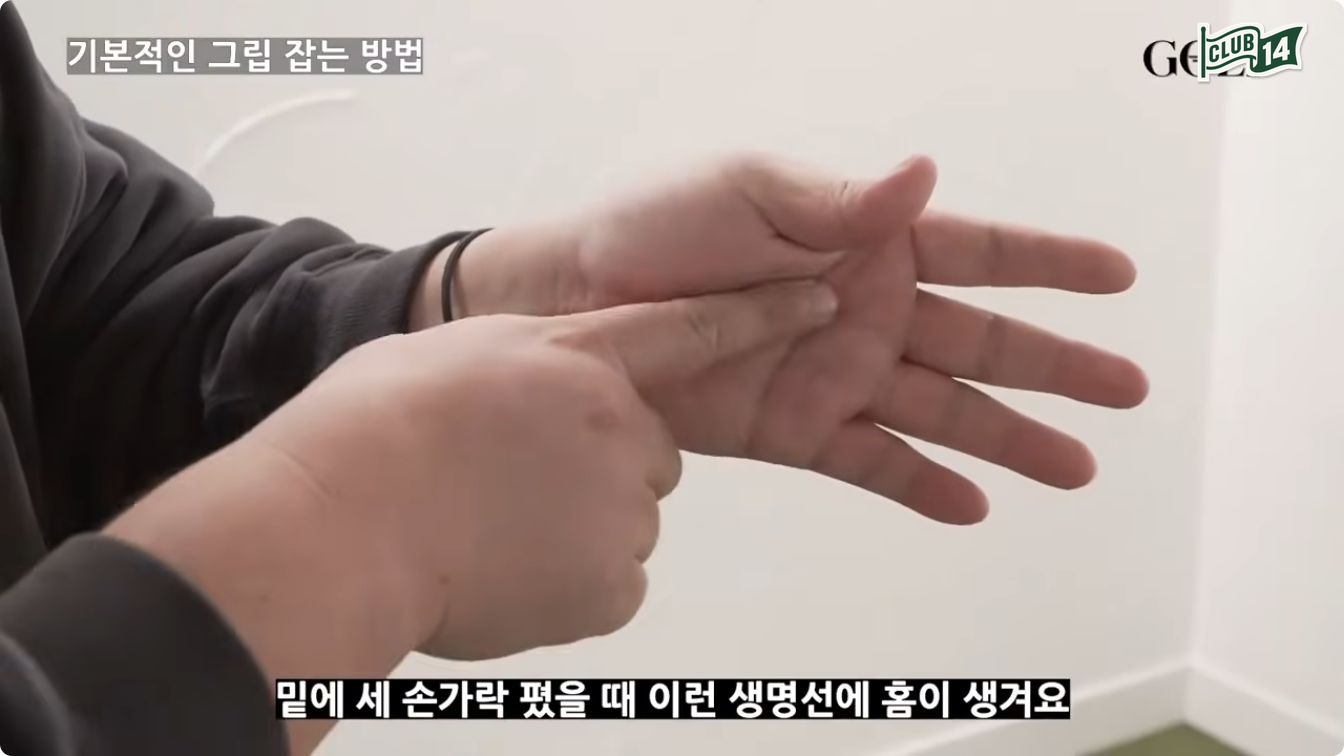
- Lower your index finger to make the top of your wrist flat (unbent).
- If you lower your thumb and place it on your finger, a groove forms on the lifeline.
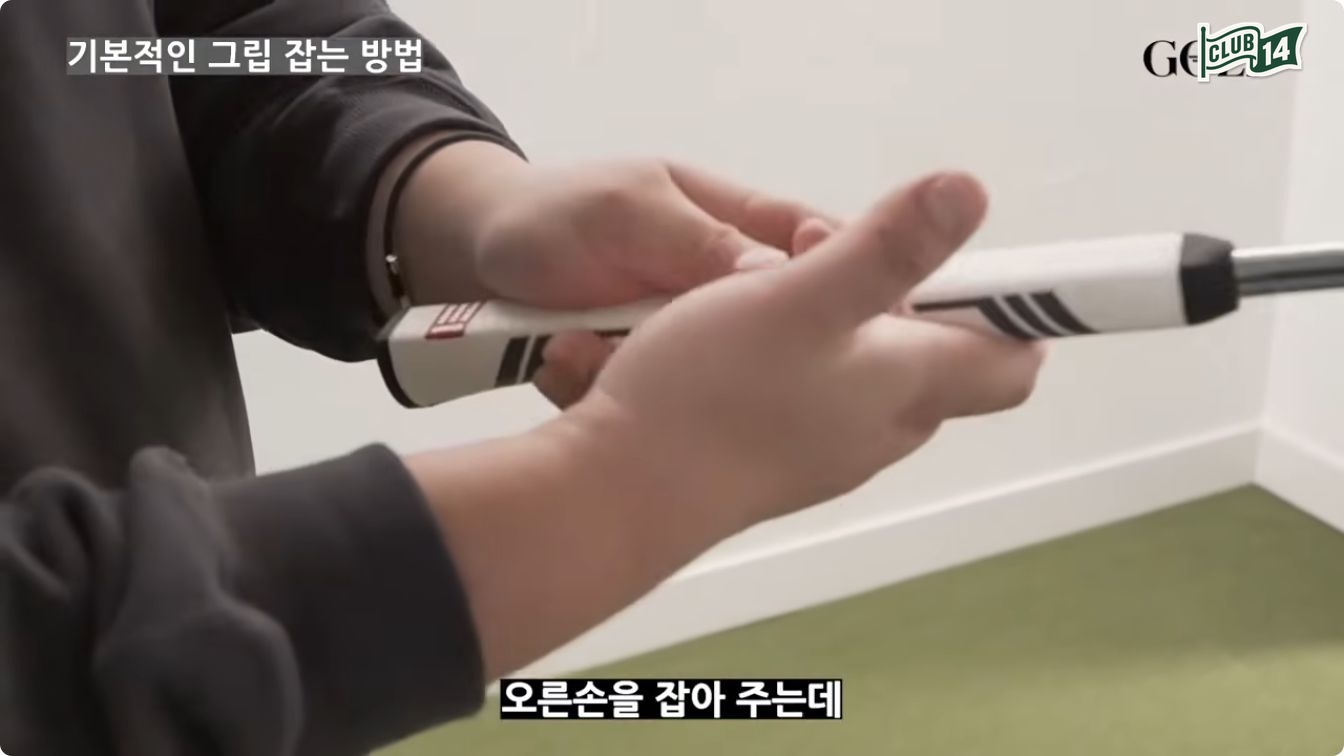
- Place the left side of the top edge of the putter against that groove — the side edge of the putter is caught on the lifeline of the index finger and thumb.
- Keep your index finger extended, and insert all your right fingers underneath it to grasp your right hand.
- If you grip your right thumb too straight up, your right arm will appear too high when viewed from the side, interfering with the stroke; therefore, grip the club with your thumb slightly diagonally inward so that both arms are at the same height.
02Clamp Grip — For those with shaky hands
The tongs grip was a trend, or rather, a fad, for a while, but I have a specific case in which I recommend it. It is for people who suffer from hand tremors or tremors.
People like this often experience hand tremors when putting, but surprisingly, if you roll the ball with the back of your hand facing forward and apply force in the opposite direction, the tremors sometimes disappear. If you are one of those people, trying a claw grip in the opposite direction of your normal grip will help you handle the club much more easily.
03Cross-hand grip — For those with an open upper body or a large build
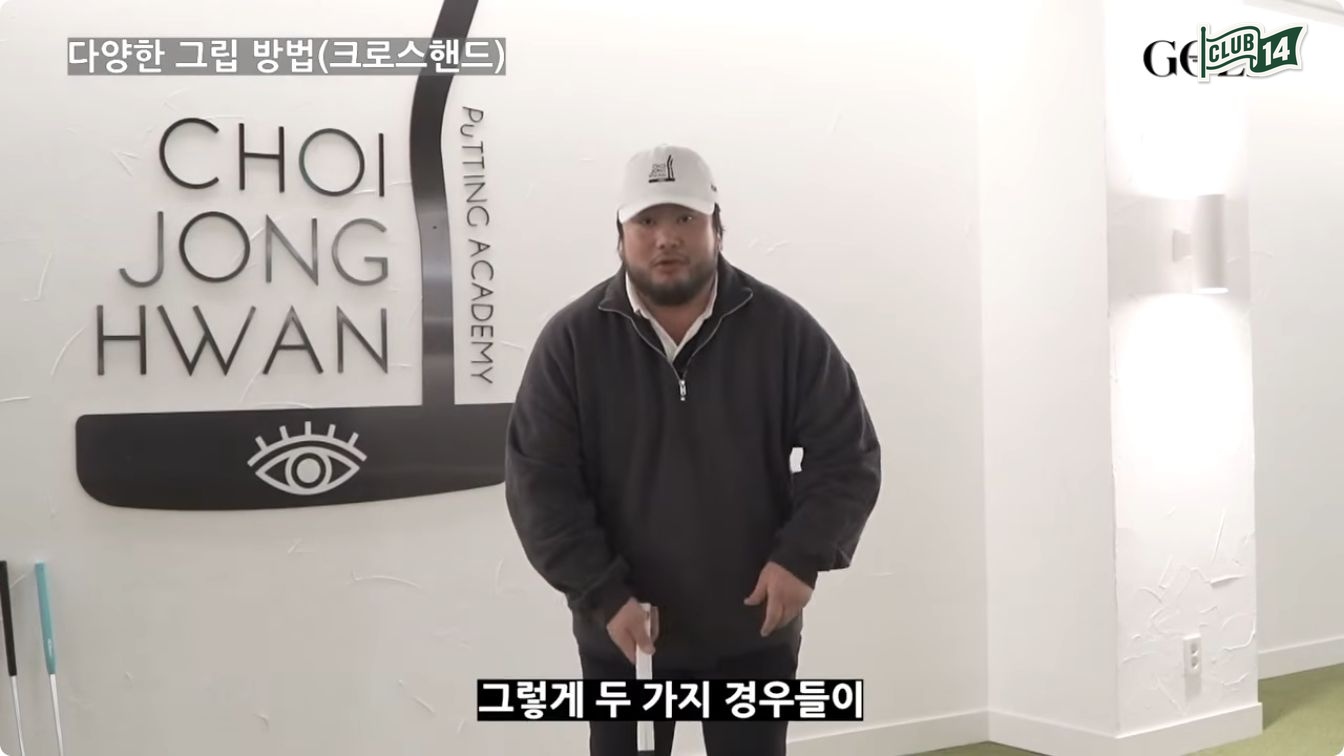
The cross-hand grip is a grip where the left hand is placed underneath. There are two cases where this grip is recommended.
- For those whose upper body opens up significantly when using a standard grip — lowering the left hand often improves shoulder alignment.
- For those like me with a large build who find it uncomfortable to keep their arms together—holding a cross-hand grip allows the right arm to naturally spread out to the side, providing comfort during strokes.
To summarize, start by mastering the basic grip. If you experience hand tremors, try the opposite pincer grip; if your upper body opens up or you find it difficult to keep your arms together, try the cross-hand grip. I recommend trying all three on the practice green and choosing the grip that produces the most comfortable stroke.