This article was machine-translated from the Korean original. Read the Korean original
Today, I will summarize the putting routine—that is, the entire process we go through when making a single putt on the green.
There is one skill that most mental coaches emphasize: focusing on the process, not the result. Scoring the ball is the goal, not the process. If this process is not organized, people tend to focus only on the goal, which makes them prone to psychological symptoms such as physical stiffness and trembling hands. To improve your mental strength, you must have your own clearly organized routine process.
01Step 1 — Check the slope with the baseline
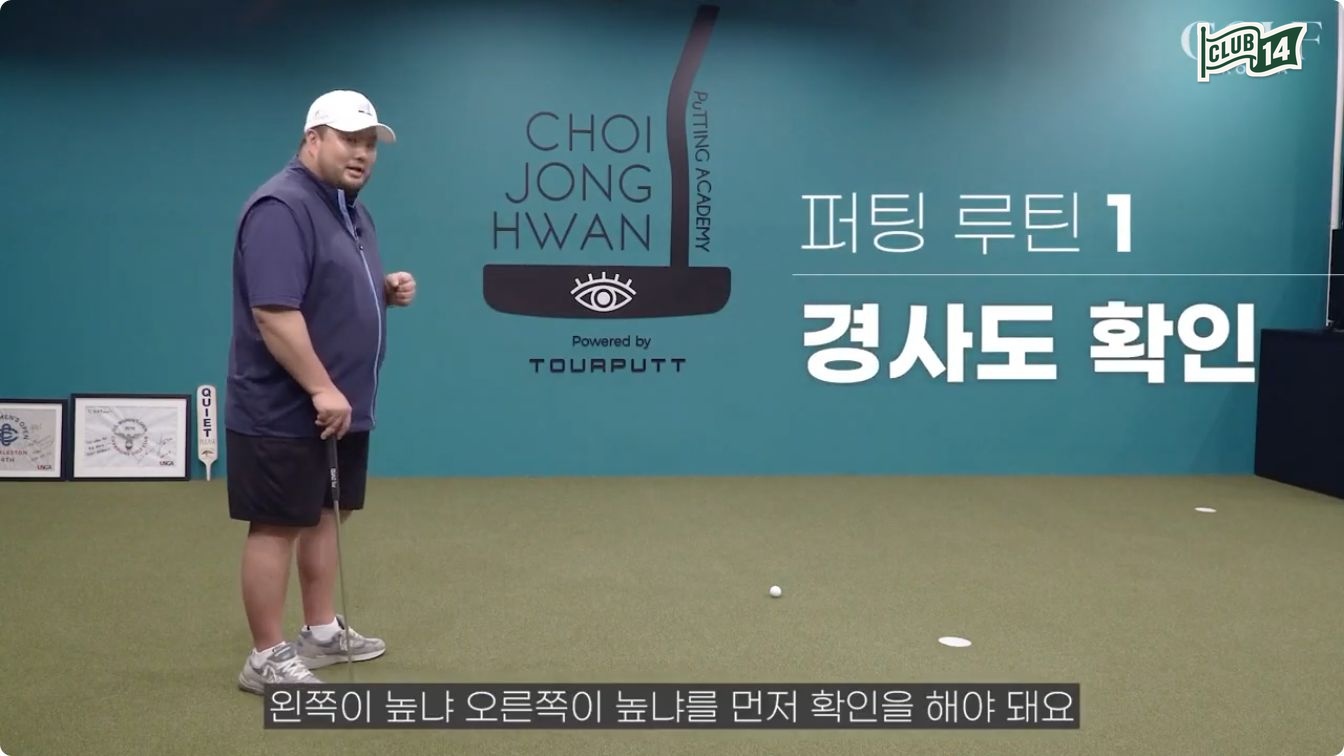
When you reach the green, the first thing you need to do is check whether the left or right side is higher based on the baseline—the line extending from the ball to the hole. You can observe from a distance in a low stance, or walk toward the lower side and feel the slope with your feet. By observing the hole's position from the side, you can also determine whether the slope is uphill or downhill.
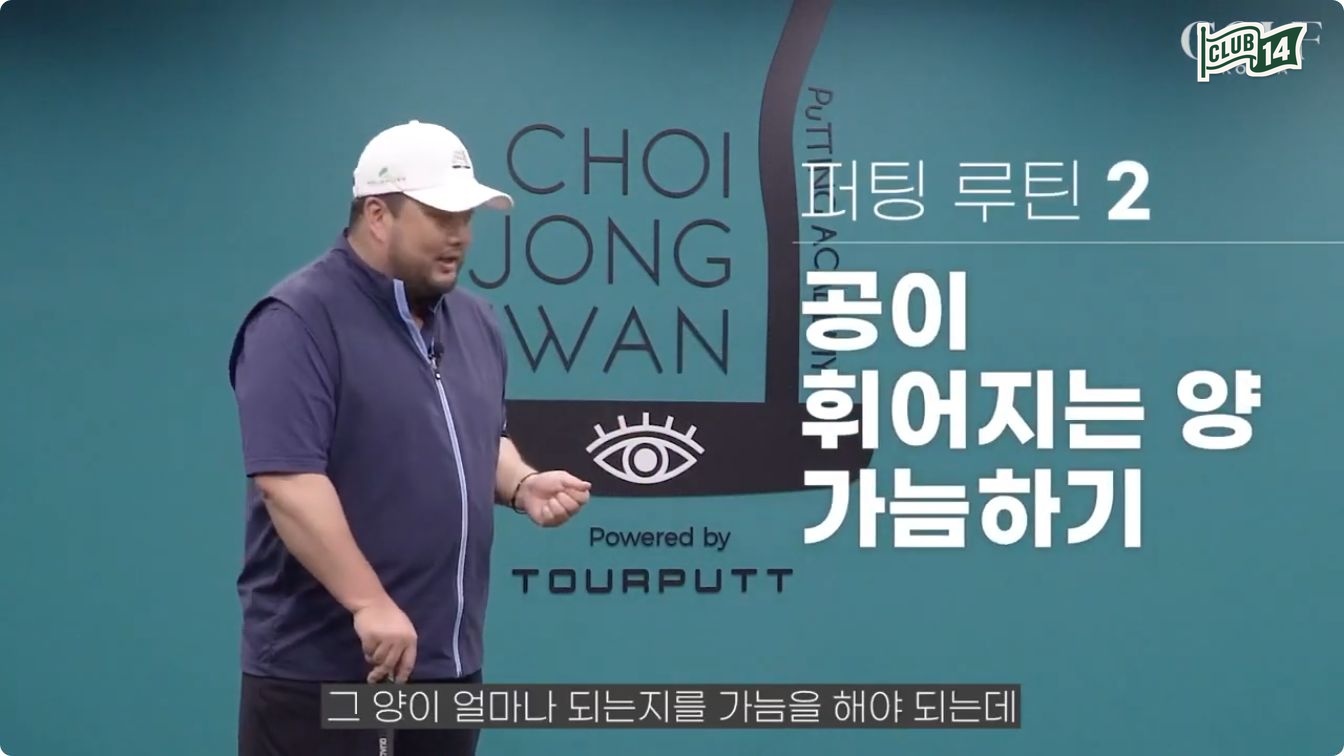
02Step 2 — Estimating the Amount of Bending
Once the elevation is determined, the next step is to gauge how much the ball will curve. The steeper the slope, the more it curves; on a downhill slope, you tend to hit the ball softer, which increases the travel time to the hole and thus causes it to curve even more. Faster green speeds also cause the ball to curve more for the same reason. Finally, the speed at which you sink the ball also has an impact. A bold speed results in less curvature, while trying to sink it gently with precise shots results in more curvature.
Once the speed is determined by combining these elements, you can visualize the curve the ball traces from behind. Imagine the starting direction of that curving path as a straight line, and then determine that line.
03Step 3 — Rehearsal Strokes
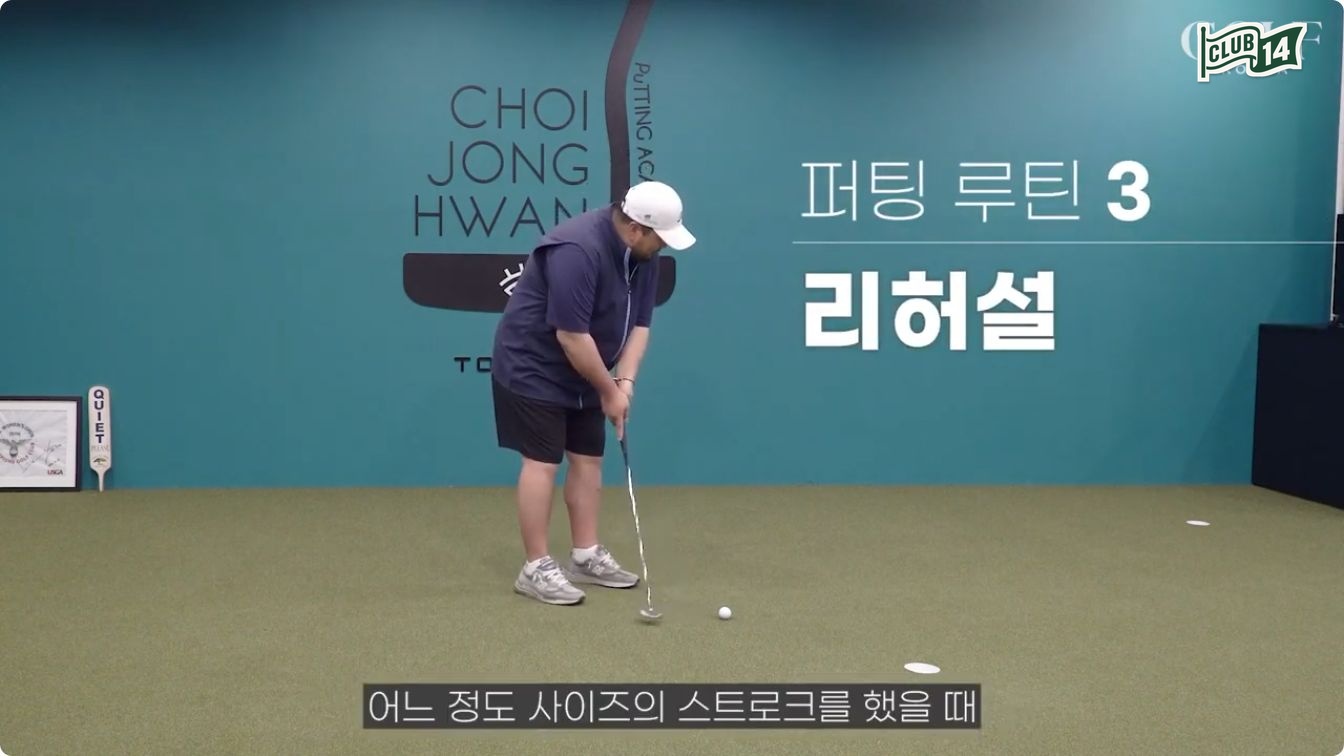
Once the line is determined, move towards the ball and gauge the stroke size while visualizing that line and the starting direction. The most important concept at this stage is rehearsal. Just as a singer sings a song in advance, you practice the stroke you will need to execute in the actual game right here. You don't just swing the club haphazardly and stop; instead, you practice while looking at the starting line until you can gauge, "If I hit it with this size, the ball will go in this direction and at this speed."
Once you have finished estimating, aim the putter face, lie, and loft along that line, and after aligning, simply repeat the stroke of the size you determined earlier.
04Look at the target to gauge the stroke size.
Most amateurs rehearse by watching their strokes with the intention of making the stroke straight. However, doing so makes it very difficult to gauge the appropriate stroke size for the distance. It is the same principle as looking at the trash can instead of your hand when throwing a crumpled piece of paper into it. You need to look at the target to control the force for the distance.
However, many people feel awkward and anxious if told to look only at the target from the start. Therefore, the best method is to check the stroke itself while looking at the club head for the first one or two tries, and then gauge the stroke size while looking at the target for the last one or two tries.
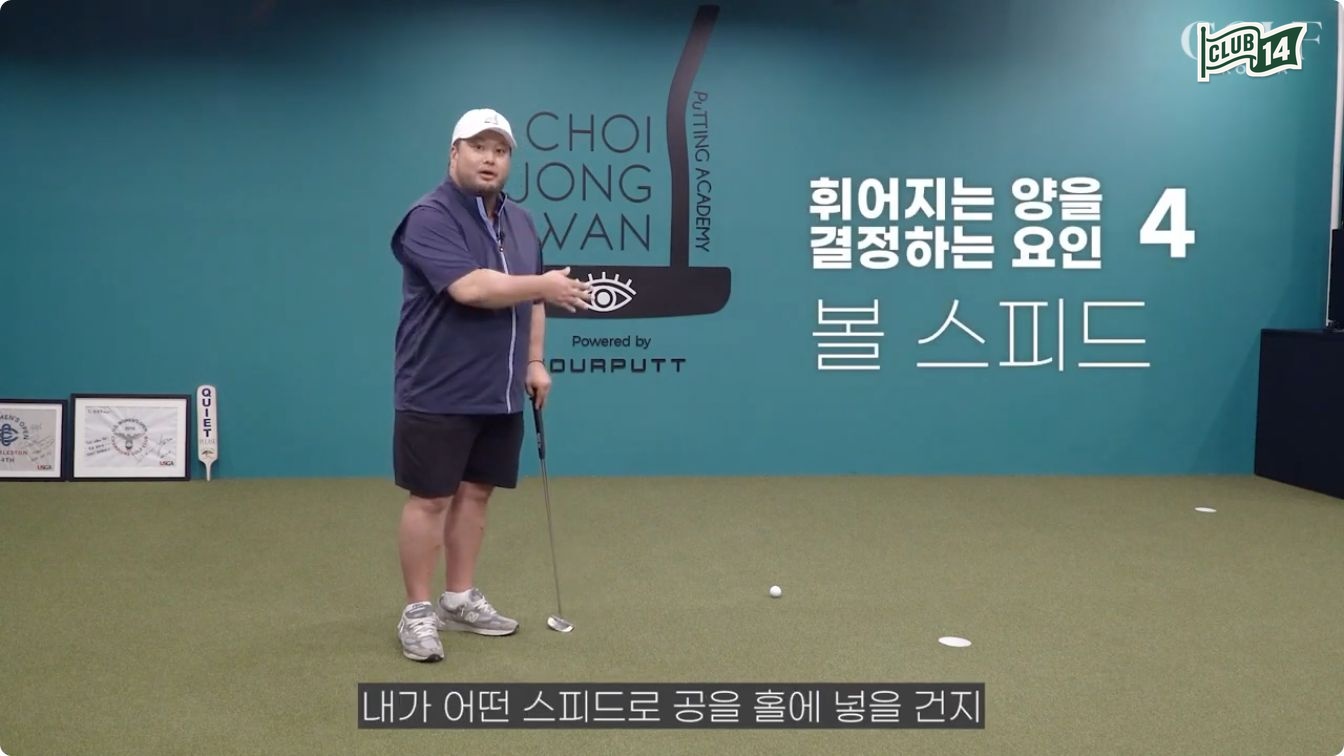
The position for rehearsing also varies from person to person. Some players, like Ko Jin-young and Yoo Hae-ran, place the club head forward, while others practice from the side. You should test the position yourself to determine which yields better results and choose the method that works best for you. If you practice step-by-step in the order I outlined today, your routine will become much more stable.